The 18.5-Mile Reset: Swapping Highway Miles for Lakefront Trail Views
Chicago has a way of changing the rhythm of a road trip. After hours of interstate signs, fuel stops, and dashboard views, the lake suddenly appears between the buildings, the skyline pulls into focus, and sitting in traffic starts to feel like the one Chicago experience worth skipping.
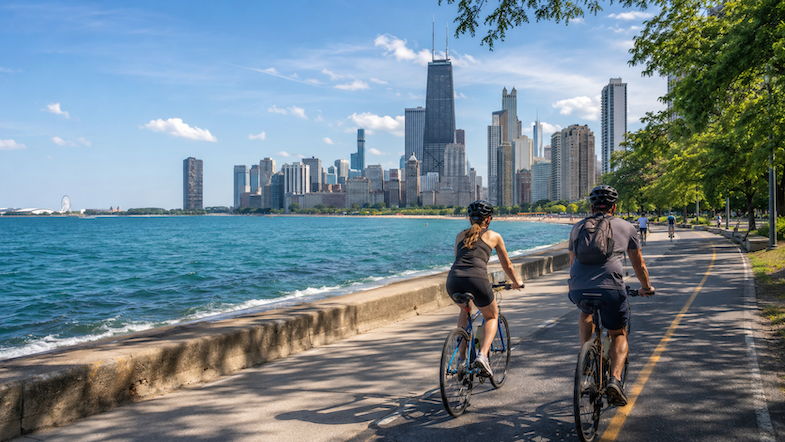
That’s when it makes sense to park the car for a while. For anyone starting a Route 66 road trip or passing through Chicago on a longer Midwest loop, a ride along the lakefront can turn a quick stop into something you’ll actually remember. No complicated itinerary. No need to cover the whole shoreline. Just a bike, some fresh air, and a better way to shake off the highway. Why Chicago Works as a Two-Wheel Detour
Why Chicago Works as a Two-Wheel Detour
Big cities can be rough on road-trippers. There are ramps to figure out, garages to find, traffic lights that seem to last forever, and views that disappear before you get a decent look at them. Chicago is no exception, but it rewards you the moment you slow down.
On a bike, the city starts to feel more personal. You notice the curve of the shoreline. You catch the smell of food carts near the parks. Boats move through the harbor. The skyline shifts a little every few blocks, which is something you miss when you’re watching brake lights.
That change of pace matters after a long drive. A bike ride gets your legs moving without turning the day into a major production. You can ride for an hour, grab lunch, take a few photos, and head back to the car with enough energy left for the next stretch of road.
A Loose Lakefront Route for Road-Trippers
Start with a small plan. Museum Campus is a good first target, especially if you want skyline photos, open lake views, and a quick feel for the trail before deciding how far to go. From there, you can roll north toward Grant Park, Buckingham Fountain, and the busier stretches near Navy Pier.
That route gives you classic Chicago without making the ride feel like a checklist. You’ll get crowds in places, sure, but you’ll also get those little pockets where the city opens up and the lake takes over.
For something calmer, aim toward Lincoln Park. That stretch has beaches, green space, harbor views, and enough neighborhood energy to make the ride feel less touristy. Pick the section that fits your mood and the miles still waiting after lunch.
What to Pack Before You Leave the Car
A Chicago bike day doesn’t require much gear. Still, a few small choices can save you from annoying problems later. Bring water, sunglasses, a light layer, and a small backpack that sits comfortably while you ride. A portable phone charger is worth the space, especially if you’re using maps, checking parking, taking photos, or unlocking a rental bike through an app.
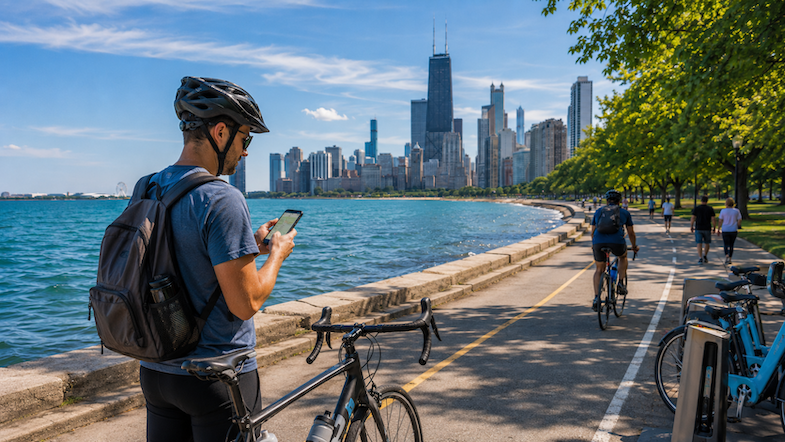
Before you pedal away, save your parking location. Take a screenshot of your route. Keep your ID and insurance card with you, and leave anything valuable out of sight in the car. Road-trippers know how quickly a simple stop can get irritating when one small detail gets missed.
Give yourself enough daylight, as well. The best lakefront rides feel relaxed. They’re harder to enjoy when you’re racing the clock.
The Smart Traveler’s Backup Plan
If you plan for flat tires, bad weather, wrong turns, and surprise closures on the highway, it makes sense to bring that same mindset to a bike ride in an unfamiliar city. Before heading out, save a few useful local resources on your phone: bike-share support, emergency contacts, insurance details, and Chicago cycling accident help in case a crash turns a scenic detour into something more complicated.
That kind of prep doesn’t make the ride feel heavy. It just clears a few loose ends before you go. You’re there for the lake air, the skyline, and the rare pleasure of leaving the car parked for a while.
Big-City Cycling Without Overthinking It
Chicago’s lakefront can feel easygoing, especially on a clear day, but it still takes attention. The trail brings together commuters, tourists, runners, walkers, dogs, scooters, families, and people who all seem to be moving at different speeds.
Give yourself room. Slow down near crowded areas. Treat crossings as part of the ride, not an interruption. If the trail gets packed, take a break. If the weather turns, find coffee. If your legs are done, head back.
There’s no prize for squeezing every possible mile out of the day. A good detour should send you back to the road feeling better than when you arrived.
Back to the Road
After a ride along the lakefront, getting back in the car feels easier. Your legs have stretched, your head is clearer, and Chicago feels less like a place you passed through and more like a place you actually experienced.
A few miles by the water can do that. It gives the trip a pause, a view, and a better story before the next stretch of highway.
Mike Shubic



![Top-5 Best Places to visit in Belgium beyond Brussels [video included]](https://mikesroadtrip.com/wp-content/uploads/2020/07/Pin-6b.jpg)
![Top-10 Most Interesting Facts about Arizona [Video Included]](https://mikesroadtrip.com/wp-content/uploads/2020/07/Pin-2.jpg)